
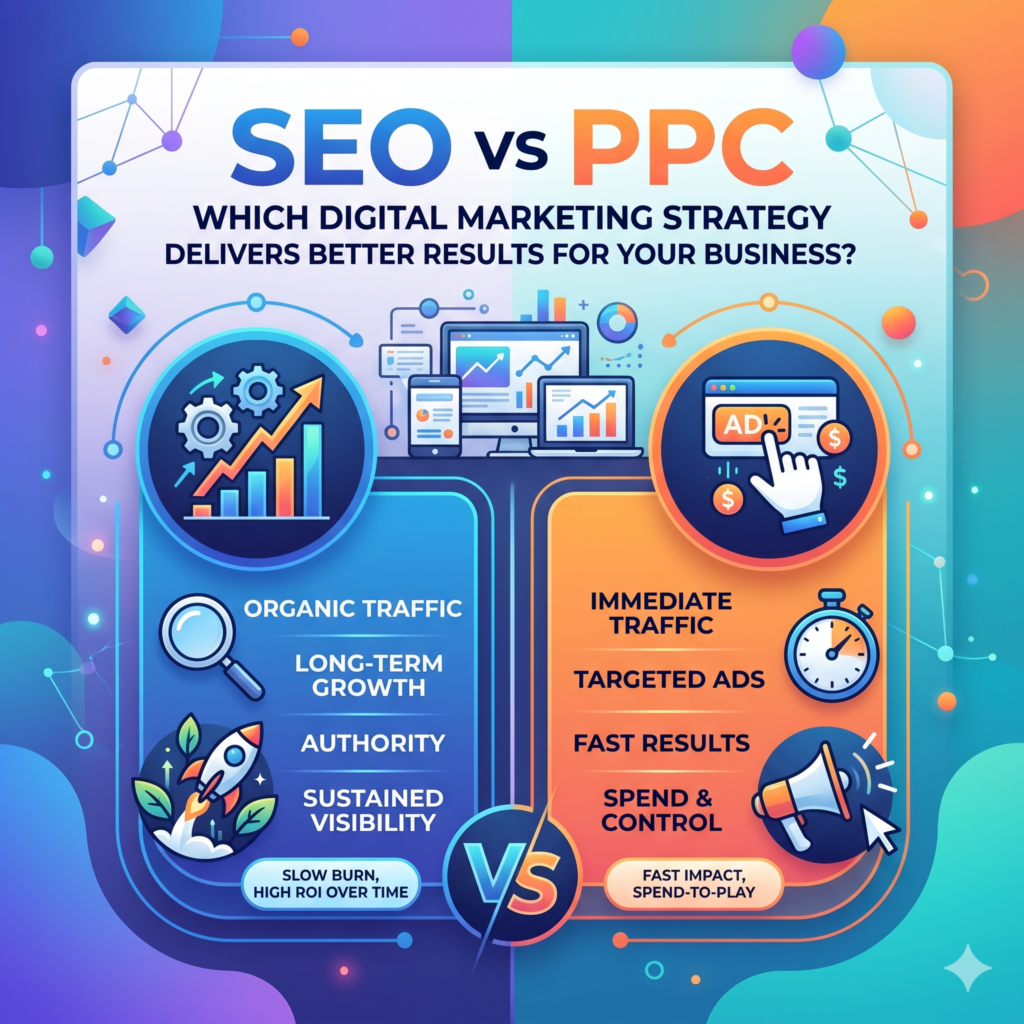
In today’s competitive online marketplace, every business wants visibility, traffic, and conversions. Whether you run a local garage service, an eCommerce store, or a national automotive brand like Apna Mechanic, choosing the right marketing strategy can make or break your online growth. Two of the most powerful digital marketing methods are SEO vs PPC.
Businesses often struggle to decide between SEO vs PPC because both strategies offer unique advantages. One focuses on long-term organic visibility, while the other provides instant paid traffic. Understanding the difference between SEO vs PPC helps businesses allocate budgets wisely and achieve sustainable growth.
The debate around SEO vs PPC is not about which one is universally better. Instead, it is about understanding which approach aligns with your goals, timeline, and budget. Some companies benefit more from search engine optimisation, while others generate faster returns using paid advertising campaigns.
This detailed guide explains everything you need to know about SEO vs PPC, including advantages, disadvantages, costs, traffic quality, conversion potential, and how businesses can use both together for maximum results.
Understanding SEO and PPC
Before comparing SEO vs PPC, it is important to understand what each term means.
What is SEO?
SEO stands for Search Engine Optimisation. It is the process of improving a website so that it ranks higher in organic search engine results on platforms like Google.
SEO includes multiple techniques such as:
Keyword Optimisation
Using targeted keywords naturally throughout your content helps search engines understand your page relevance.
Technical SEO
Improving website speed, mobile responsiveness, indexing, crawlability, and site architecture.
On-Page SEO
Optimising titles, meta descriptions, headings, internal links, and content structure.
Off-Page SEO
Building backlinks and improving domain authority through external references.
Local SEO
Optimising Google Business Profiles and local listings for location-based searches.
When discussing SEO vs PPC, SEO is considered the long-term investment strategy because rankings take time to build but can generate consistent free traffic for years.
What is PPC?
PPC stands for Pay-Per-Click advertising. In PPC campaigns, businesses pay whenever a user clicks their advertisement.
Popular PPC platforms include:
- Google Ads
- Meta Ads
- Microsoft Advertising
- YouTube Ads
- LinkedIn Ads
In the comparison of SEO vs PPC, PPC provides immediate visibility because ads appear at the top of search results almost instantly.
How PPC Works
Businesses bid on keywords. When users search those terms, ads compete in an auction system based on:
- Bid amount
- Ad quality
- Landing page relevance
- Expected click-through rate
PPC can generate leads immediately, making it highly effective for short-term campaigns.
SEO vs PPC: The Core Difference
The biggest difference between SEO vs PPC lies in traffic acquisition.
SEO Generates Organic Traffic
SEO attracts unpaid visitors through organic rankings. Once your content ranks well, you can continue receiving traffic without paying for every click.
PPC Generates Paid Traffic
PPC requires continuous ad spend. The moment you stop paying, traffic stops immediately.
This distinction is central to understanding SEO vs PPC because it affects long-term marketing sustainability.
SEO vs PPC: Which is Better for Long-Term Growth?
When comparing SEO vs PPC for long-term business growth, SEO often wins due to sustainability.
Benefits of SEO for Long-Term Success
Consistent Organic Traffic
A well-ranked page can attract visitors for months or even years.
Higher User Trust
Users generally trust organic search results more than paid advertisements.
Better ROI Over Time
Although SEO takes longer initially, the long-term return on investment can be extremely high.
Brand Authority
High rankings improve credibility and establish expertise within your industry.
Lower Long-Term Costs
Once rankings stabilise, maintenance costs are lower compared to continuous PPC spending.
Businesses focusing on sustainable growth usually prioritise SEO in the SEO vs PPC debate.
SEO vs PPC: Which Delivers Faster Results?
If speed is your priority, PPC clearly dominates the SEO vs PPC comparison.
Advantages of PPC for Fast Results
Instant Visibility
Ads can appear within hours of campaign launch.
Immediate Traffic
You can start generating visitors instantly.
Quick Lead Generation
PPC works exceptionally well for urgent promotions and seasonal campaigns.
Precise Targeting
Advertisers can target users based on:
- Location
- Interests
- Search intent
- Devices
- Age groups
Scalable Campaigns
Increasing budget can instantly boost traffic volume.
For new businesses requiring immediate exposure, PPC becomes highly valuable in the SEO vs PPC discussion.
Cost Comparison: SEO vs PPC
Budget plays a major role when businesses choose between SEO vs PPC.
SEO Costs
SEO involves:
- Content creation
- Website optimisation
- Technical improvements
- Link building
- SEO tools
Although SEO may require upfront investment, ongoing costs are often lower over time.
PPC Costs
PPC requires constant spending on:
- Click costs
- Campaign management
- Ad creatives
- Landing page testing
Highly competitive industries can have expensive keyword bids.
SEO vs PPC Cost Breakdown
SEO vs PPC long-term cost comparison
Estimated monthly marketing spend pattern over 12 months.
SEO cost
PPC cost£0£750£1.5K£2.3K£3KMonth 1Month 2Month 3Month 4Month 5Month 6Month 7Month 8Month 9Month 10Month 12
SEO generally becomes more cost-efficient over time while PPC maintains recurring costs.
This demonstrates why many businesses eventually prefer SEO in the SEO vs PPC comparison for long-term profitability.
Traffic Quality in SEO vs PPC
Not all website traffic converts equally.
SEO Traffic Quality
Organic users often trust search results more because they perceive them as unbiased.
SEO traffic usually offers:
- Higher engagement
- Better session duration
- Increased trust
- Strong informational intent
PPC Traffic Quality
PPC traffic can convert extremely well when campaigns target commercial-intent keywords.
Examples include:
- “Book car service near me”
- “Emergency mechanic service”
- “Buy engine oil online”
In the SEO vs PPC comparison, PPC often delivers better transactional traffic, while SEO excels in informational and research-driven traffic.
SEO vs PPC for Local Businesses
Local businesses such as automotive repair services benefit from both strategies.
How SEO Helps Local Businesses
Local SEO helps businesses rank for nearby searches such as:
- Car repair near me
- Mechanic in London
- Emergency towing service
Optimising:
- Google Business Profile
- Customer reviews
- Local citations
- Location pages
improves visibility dramatically.
How PPC Helps Local Businesses
PPC allows local businesses to appear instantly for high-converting searches.
Advantages include:
Geo-Targeting
Ads appear only in selected locations.
Call Extensions
Users can contact businesses directly from ads.
Immediate Bookings
High-intent users convert quickly.
For businesses like Apna Mechanic, combining SEO vs PPC strategies creates a balanced customer acquisition system.
SEO vs PPC for Brand Awareness
Brand visibility matters in every industry.
SEO and Brand Authority
Appearing organically for multiple keywords builds trust and recognition.
Users repeatedly seeing your content perceive your brand as an industry expert.
PPC and Brand Reach
PPC helps brands dominate search results instantly.
Businesses can use:
- Search ads
- Display ads
- YouTube ads
- Remarketing campaigns
to expand awareness rapidly.
When analysing SEO vs PPC for branding, the ideal approach often combines both.
SEO vs PPC Conversion Rates
Conversion performance depends heavily on user intent.
SEO Conversion Strengths
SEO content captures users at different buying stages.
Examples:
Awareness Stage
Users searching educational content.
Consideration Stage
Users comparing options.
Decision Stage
Users looking for services or products.
SEO nurtures customers gradually through the sales funnel.
PPC Conversion Strengths
PPC targets users with immediate intent.
Examples include:
- “Book MOT test today”
- “Same-day mechanic service”
- “Affordable car battery replacement”
Because PPC focuses heavily on purchase-ready users, conversions can occur faster.
In the SEO vs PPC debate, PPC often converts quicker, while SEO builds broader long-term customer relationships.
SEO vs PPC and AI Search Evolution
Search engines are evolving rapidly because of AI technologies.
Platforms powered by artificial intelligence now analyse:
- User intent
- Semantic relevance
- Contextual meaning
- Conversational queries
This changes how businesses approach SEO vs PPC.
SEO for AI-Driven Search
Modern SEO must focus on:
Helpful Content
Content should genuinely answer user questions.
Topic Authority
Search engines prefer comprehensive expertise.
Conversational Optimisation
Natural language optimisation helps AI-driven systems understand content better.
Structured Data
Schema markup improves search understanding.
AI search systems reward human-focused content rather than keyword stuffing.
PPC in the AI Era
AI is also transforming PPC through:
- Automated bidding
- Smart targeting
- Predictive analytics
- Dynamic ad creation
AI-driven PPC campaigns improve efficiency and reduce manual optimisation requirements.
Businesses adapting to AI trends gain advantages in the SEO vs PPC landscape.
When Should You Choose SEO?
SEO is ideal when:
You Want Sustainable Traffic
Organic rankings continue generating visitors over time.
You Have a Long-Term Vision
SEO rewards patience and consistency.
You Want Higher Trust
Organic rankings improve credibility.
You Need Cost Efficiency
SEO often delivers stronger long-term ROI.
Your Industry Relies on Research
Industries with research-heavy customer journeys benefit significantly from SEO.
When Should You Choose PPC?
PPC is best when:
You Need Immediate Results
Perfect for launches and promotions.
You Want Fast Lead Generation
Ads can produce enquiries quickly.
You Have Competitive Keywords
Paid ads help bypass difficult organic competition.
You Need Precise Audience Targeting
PPC targeting capabilities are highly advanced.
You Are Testing New Offers
PPC helps validate products and services rapidly.
Why Combining SEO and PPC Works Best
The smartest businesses rarely choose only one strategy in the SEO vs PPC debate.
Combining both creates a powerful digital marketing ecosystem.
Benefits of Combining SEO and PPC
Maximum Search Visibility
Appear in both paid and organic results simultaneously.
Better Keyword Insights
PPC data helps identify high-converting SEO keywords.
Stronger Brand Recognition
Repeated visibility increases trust.
Improved Retargeting
SEO visitors can later be targeted with PPC ads.
Balanced Traffic Sources
Reduces reliance on a single channel.
Companies combining SEO vs PPC strategies often achieve stronger overall growth.
Common Mistakes Businesses Make with SEO vs PPC
Many businesses fail because they misunderstand how SEO vs PPC should work.
Ignoring SEO Completely
Relying only on ads becomes expensive long-term.
Expecting Instant SEO Results
SEO requires patience and consistency.
Running Poor PPC Campaigns
Bad targeting wastes advertising budgets.
Neglecting Landing Pages
Traffic without optimisation reduces conversions.
Focusing Only on Rankings
User experience matters more than vanity metrics.
Avoiding these mistakes improves success in the SEO vs PPC journey.
Future Trends in SEO vs PPC
Digital marketing continues evolving rapidly.
Voice Search Optimisation
Voice-based searches are increasing globally.
AI Content Personalisation
AI will personalise both organic and paid search experiences.
Visual Search Growth
Image-based search technologies are expanding.
Predictive Advertising
AI-driven PPC will become more automated.
Search Intent Optimisation
Understanding user intent will dominate future SEO strategies.
Businesses preparing for these trends will remain competitive in the evolving SEO vs PPC environment.
Final Verdict: SEO vs PPC
The answer to SEO vs PPC depends entirely on your business goals.
If you want:
- Long-term growth
- Sustainable traffic
- Brand authority
- Better long-term ROI
then SEO is the stronger investment.
If you need:
- Instant visibility
- Immediate leads
- Fast campaign performance
- Short-term traffic boosts
then PPC is the better option.
However, the most successful businesses use both SEO vs PPC together. SEO builds long-term credibility, while PPC delivers immediate opportunities. Combining the strengths of both creates a balanced and scalable digital marketing strategy.
For brands like Apna Mechanic, integrating SEO vs PPC can drive stronger visibility, increased bookings, and sustainable business growth in a highly competitive online marketplace.
Frequently Asked Questions
Is SEO better than PPC?
SEO is better for long-term organic growth, while PPC is better for immediate traffic and quick conversions.
Which is cheaper: SEO or PPC?
SEO is generally cheaper over the long term, whereas PPC requires ongoing advertising spend.
Can SEO and PPC work together?
Yes, combining SEO vs PPC strategies often produces the best marketing results.
How long does SEO take to show results?
SEO typically takes three to six months before significant improvements appear.
Does PPC improve SEO rankings?
PPC does not directly improve SEO rankings, but it can increase brand visibility and traffic.
Which is better for small businesses?
Small businesses often benefit from combining local SEO with targeted PPC campaigns.
Is SEO still relevant in the AI era?
Yes, SEO remains highly relevant because AI search systems prioritise useful, authoritative, and user-focused content.
Should startups use SEO or PPC first?
Startups often begin with PPC for immediate visibility while building long-term SEO foundations.
Great content! Keep up the good work!